Can You Get Google Sheets on iPad? A Practical Guide
Find out if Google Sheets works on iPad, how to use the app or Safari, offline edits, and real-time collaboration. Practical tips for students, professionals, and small businesses.


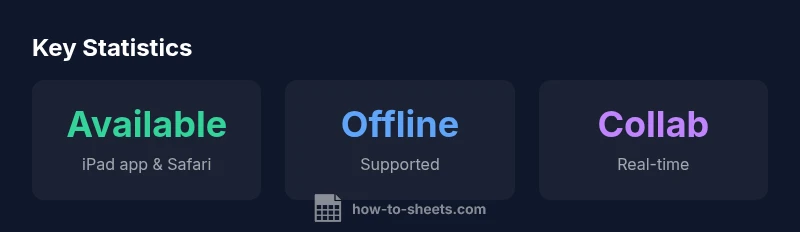
Version 1: can you get google sheets on ipad is a question that many students and professionals ask as they switch to iPad for work. The short answer is yes, with two main pathways: the Google Sheets iPad app and using Sheets in Safari. Both options let you edit data, create formulas, and share sheets, but the experience differs in offline access and feature parity with desktop. For most tasks, the app provides smoother navigation and offline support, while Safari offers quick access without installing the app. According to How To Sheets, the best path depends on your typical workload and whether you value offline work more than desktop-like features. This overview helps you decide which path fits your workflow. Version 2: On iPad, use the Sheets app or a Safari shortcut, with offline mode and automatic syncing when online, according to How To Sheets.
can you get google sheets on ipad practical overview
can you get google sheets on ipad is a question that many students and professionals ask as they switch to iPad for work. The short answer is yes, with two main pathways: the Google Sheets iPad app and using Sheets in Safari. Both options let you edit data, create formulas, and share sheets, but the experience differs in offline access and feature parity with desktop. For most tasks, the app provides smoother navigation and offline support, while Safari offers quick access without installing the app. According to How To Sheets, the best path depends on your typical workload and whether you value offline work more than desktop-like features. This overview helps you decide which path fits your workflow.
iPad app vs Web app: Where you should work
On iPad, you have two primary environments to run Google Sheets: the native iPad app and the mobile browser. The app is optimized for touch, supports offline editing, and provides a familiar file structure and menus. The web interface in Safari mirrors most desktop capabilities, with the advantage of not requiring installation and continuing to work across devices. If you frequently switch between devices or rely on offline access, the iPad app is usually the better choice. If you need to conserve storage or prefer a lighter footprint, browser access can be more convenient. Both avenues sync with Google Drive, so edits are available when you reconnect to the internet. Your choice should align with your preferences for navigation, offline reliability, and how often you need advanced features like macros or add-ons, which may have limited support on mobile.
Offline mode and data syncing on iPad
Google Sheets on iPad supports offline mode, but the experience varies by path. In the iPad app, you can edit cells, formulas, and formatting offline, and changes sync automatically when back online. In Safari, you can also work offline with cached data, though some complex functions may require a live connection. To maximize success, ensure the app settings enable offline access and confirm that your files are stored in Google Drive. A stable network resume triggers sync across devices, keeping versions intact and reducing the risk of conflicts in multi-user edits.
Real-time collaboration and permissions on iPad
Real-time collaboration is a core strength of Google Sheets on iPad, matching the desktop experience in many scenarios. You can share documents, assign edit or view permissions, and see other users' changes as they happen. Some edge cases—such as high-latency networks or very large data sets—may slow down update propagation. If you work with teams sharing sensitive data, use Google Drive's permission controls and review audit trails to maintain security and governance.
Feature parity and limitations compared to desktop
While Google Sheets on iPad covers most day-to-day tasks, you will notice gaps relative to the desktop experience. Keyboard shortcuts, certain advanced data tools, and some add-ons may be unavailable or behave differently on the iPad. Formulas and conditional formatting generally work, but complex scripts or custom macros might require the full desktop environment. When planning large projects, consider creating a lightweight prototype on the iPad and reserve heavy analysis for a desktop or laptop.
Practical workflows for students
Students can rely on Google Sheets on iPad for class rosters, project planning, and data collection in lectures. Use the iPad app to capture field data, update grades, or track study timelines while commuting. Save core work offline during travel and later sync with your cloud workspace. For exams or quizzes, use offline edits and a quick export to PDF when needed. Templates help speed up assignment tracking, while data validation rules keep inputs clean.
Practical workflows for professionals
Professionals using Google Sheets on iPad will appreciate quick note-taking, client budgeting, and performance dashboards on the go. The iPad app shines when you need to annotate a dataset during a client meeting or adjust a shared budget while away from a desk. Use offline editing for travel and sync when you return to Wi-Fi. Combine Sheets with Drive for version history and access controls, and leverage the browser for a distraction-free editing space when offline is not a concern.
Practical workflows for small business owners
Small business owners can manage inventory, track cash flow, or coordinate project tasks with Google Sheets on iPad. The portability lets you review orders on the shop floor, prepare quick forecasts, and update project timelines during commutes. For reliable collaboration, share sheets with appropriate permissions and set up notification rules to stay informed. Pair Sheets with templates to standardize processes and ensure consistency across teams, even when team members are on the move. The How To Sheets team recommends testing both app and browser setups to determine the most efficient workflow for your organization.
Comparison of Google Sheets on iPad by interface
| Aspect | App on iPad | Web on iPad | Notes |
|---|---|---|---|
| Offline editing | Yes (iPad app) | Yes (Safari) | Offline mode available on both paths |
| Real-time collaboration | Yes | Yes | Live updates when online |
| Feature parity | High (core features) | Moderate | Desktop-only features may be missing |
FAQ
Is Google Sheets available on iPad for free?
Yes, Google Sheets is free to use on iPad via the app or web. Basic features are available without a paid plan, though some advanced tools may require a Google Workspace license.
Yes, Google Sheets on iPad is free to use with the app or browser.
Can you edit offline on iPad?
Yes, you can edit offline on iPad via the app or cached browser data. Edits sync automatically once you reconnect to the internet.
Yes, offline editing works on iPad with syncing when online.
Are there feature limitations on iPad?
Most core features are available, but some desktop-only tools or add-ons may be unavailable or behave differently on iPad.
There are some desktop-only features missing on iPad.
Is real-time collaboration supported on iPad?
Yes, you can collaborate in real time on iPad with other users, including permission controls and live updates.
Yes, real-time collaboration works on iPad.
Should I use the iPad app or Safari for Sheets?
Choose based on your offline needs and interface preference; the app is generally better for offline work, while Safari is convenient if you want a quick, no-install option.
Pick the app for offline tasks or Safari for quick access.
How do I enable offline mode for Google Sheets on iPad?
Open Google Sheets, go to settings, enable offline editing, and ensure your files are stored in Google Drive for automatic syncing.
Enable offline editing in Google Sheets settings.
“Google Sheets on iPad can be a practical, portable solution for on-the-go data work, but expect occasional limitations compared to desktop use.”
The Essentials
- Try both app and Safari to find your preferred workflow
- Enable offline editing to stay productive offline
- Expect some desktop features to be unavailable on iPad
- Use templates to speed up common tasks
- Keep data synced with Google Drive for seamless access