How to Make Google Sheets Editable: A Step-by-Step Guide
Learn how to make Google Sheets editable for teams with clear sharing, permissions, and protected ranges to balance collaboration and data protection. Step-by-step guidance helps you grant editors, lock sensitive areas, and audit access effectively.


To make a Google Sheet editable, share it with collaborators who need access and grant them Editor permissions. Review existing protections, remove restrictions that block edits, and use protected ranges to allow editing only in designated areas while keeping formulas safe. This guide explains the exact steps.
Why editing access matters in team Google Sheets
When teams rely on spreadsheets to coordinate work, control over edits becomes strategic, not optional. The phrase how to make google sheets editable captures the core challenge: enabling collaboration while protecting critical data. A well-designed permission strategy reduces accidental deletions, prevents formula breakage, and keeps version history intact. In practice, editable access should be granted only to trusted teammates who understand the data structure and business rules. This section outlines why access control matters, what to consider before granting rights, and how to structure roles so your work remains accurate and auditable.
First, classify data sensitivity: raw numbers, formulas, and output dashboards may require different access levels. Next, align access with responsibilities: editors who input data, viewers who monitor results, and commenters who provide feedback. Finally, establish governance: a documented policy, periodic access reviews, and a clear process to revoke outdated permissions. How to make google sheets editable should be viewed through this governance lens, ensuring consistency across projects for students, professionals, and small business owners.
Who should have editing rights and why
Assign editing rights based on role, responsibility, and need. In many teams, a core group of data entry and analysis specialists requires Editor access, while stakeholders who only review outcomes should be Viewers, and those providing input can be Commenters. This separation helps reduce unintended changes to formulas, named ranges, and critical sheets. When deciding who should edit, consider the work itself: who creates inputs, who validates calculations, and who approves final results. For the keyword how to make google sheets editable, this section demonstrates that edits should be purposeful and restricted to accountable individuals, not open to everyone. A disciplined approach improves data integrity and speeds up collaboration.
How Google Sheets permissions are structured: roles, sharing, and protections
Google Sheets permissions revolve around three core roles: Viewer, Commenter, and Editor. Sharing a sheet typically involves inviting people via email and assigning one of these roles. In addition, you can apply protections to locks ranges or entire sheets, ensuring editors can still contribute where allowed while critical formulas remain safe. This combination—sharing with role-based access plus range protection—provides fine-grained control over who can change what. Understanding these mechanics is essential to achieving the objective of how to make google sheets editable without sacrificing data quality or governance. Protecting sensitive cells while enabling editing in others is a common pattern for teams.
Step-by-step: Make a sheet editable for your team (narrative walkthrough)
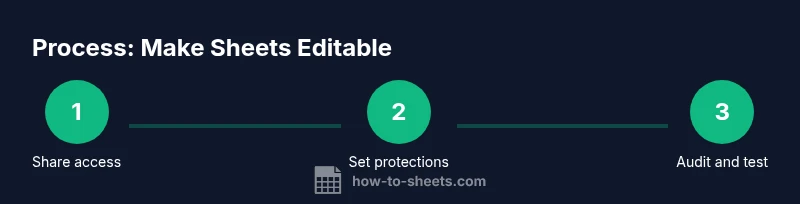
- Open the sheet in Google Sheets and review the current sharing settings. If the sheet is accessible to anyone with the link, decide whether this is acceptable or if you should restrict it to specific people. This aligns with the core idea of how to make google sheets editable in a controlled environment. 2) Click the Share button and add the people who need access, selecting Editor as the role for each. Use groups when possible to simplify ongoing maintenance. 3) If there are protected ranges or sheets, adjust permissions so Editors can edit non-protected areas while protected zones remain locked. 4) Create a clear naming convention for tabs and cells that Editors can touch, and document which sections are off-limits. 5) Review the access rights with your team and set expectations for changes, version history, and accountability. 6) Test the setup by having someone outside your admin group try to edit a permitted area and report any issues. 7) Enable Version history and consider adding a changelog description when major edits occur. 8) Schedule periodic access reviews to keep permissions aligned with current roles. 9) If you use Google Forms to feed data, ensure the form responses do not bypass sheet protections. 10) Maintain a backup copy of the sheet before major edits as a safety net. For many users, these steps underpin how to make google sheets editable effectively across various scenarios.
Best practices for collaborative editing with Google Sheets
Create a shared governance model that combines openness with accountability. Define who can edit which ranges, require editors to leave notes for significant changes, and use a consistent template for inputs. Encourage comments instead of direct edits when possible to preserve an auditable trail. Establish a process for onboarding new editors and a clear method for revoking access when someone leaves the project. Regularly training the team on permissions helps prevent accidental leakage of sensitive data and maintains a productive editing environment. The core concept of how to make google sheets editable is to ensure that collaboration happens in a structured, transparent way rather than through ad-hoc edits.
Protect ranges and sheets you want to be editable, and lock sensitive data
Use Protect ranges to allow edits only in designated cells, ranges, or sheets. Start by selecting the area to protect, then choose Data > Protected sheets and ranges. Add editors who can bypass protections in these areas, or leave the area fully locked for everyone except the admin. This approach allows widespread collaboration where appropriate while keeping critical formulas and data intact. Always relate protections to your team’s workflow and ensure that accountable individuals know how to request changes or lift protections when necessary. When done correctly, protecting ranges enables the flexibility of editing without sacrificing data integrity and security.
Common pitfalls and how to avoid them during setup
One common pitfall is granting Editor access to everyone, which can lead to accidental data loss. Another is forgetting to adjust protected ranges after adding new data or sheets, creating hidden bottlenecks. A third issue is not communicating expectations, resulting in inconsistent data entry. To avoid these problems, implement a short onboarding playbook, use groups for permissions, and set up a recurring audit to prune stale access. Also enable notifications for major edits if your organization’s policy supports it. By anticipating these pitfalls, you reduce risk and improve collaboration when you’re teaching others how to make google sheets editable.
Real-world example: a small team budget project
Consider a small startup using Google Sheets to track monthly expenses. The Finance Lead needs Editor access for data entry and formula updates, while the Operations Manager only reviews dashboards (Viewer) and the Marketing Analyst provides input via comments (Commenter). A protected range on the formulas in the budget tab ensures calculations stay accurate, while the data input areas remain editable by the Editor group. Regular monthly audits confirm that only current staff retain access, and version history documents changes during the budgeting cycle. This example demonstrates the practical application of how to make google sheets editable in a way that supports collaboration and governance.
Additional considerations: audit trails, version history, and governance for long-term use
Beyond day-to-day editing, you should adopt governance practices that make it easy to trace edits and maintain data quality. Version history is your primary tool for auditing changes, and it should be used consistently with descriptive notes. Maintain a change log for major updates, and create a standard operating procedure for permissions reviews. When teams understand the rules and know where to look for documentation, the likelihood of errors decreases and productivity increases. This broader perspective completes the guide on how to make google sheets editable by combining practical steps with governance.
Tools & Materials
- A Google account with edit access(You need Editor or Owner privileges to change sharing settings.)
- Internet-enabled device with a modern browser(Chrome, Edge, or Safari recommended for best compatibility.)
- Target Sheet(Open the sheet you want to make editable.)
- List of editors(Emails or Google Groups of people who should edit.)
- Backup copy(Optional but recommended before major permission changes.)
- Documentation of your permissions policy(Keeps governance consistent over time.)
Steps
Estimated time: Estimated total time: 15-25 minutes
- 1
Open the sheet in Google Sheets
Launch Google Sheets and open the exact file you want to adjust. Review the current sharing settings to determine whether access is already restricted or open. This helps you decide the scope of edits you will allow.
Tip: If the sheet is older, copy it first to preserve the original. - 2
Check current sharing settings
Click the Share button to view the current access list. Note who already has Edit access and whether anyone with the link is allowed to edit. Decide if you need to tighten or expand permissions.
Tip: Document the existing access for your records. - 3
Add editors explicitly
Enter the email addresses or groups of people who should edit. Choose Editor as the role for each recipient. Avoid selecting Anyone with the link as Editor.
Tip: Use groups to simplify future changes. - 4
Set up protected ranges for sensitive areas
Select the cells or sheets that should remain locked, then go to Data > Protected sheets and ranges. Define who can edit these areas and specify any exceptions.
Tip: Protect critical formulas and outputs first. - 5
Define clear editing zones
Explain to Editors which tabs or sections are open for edits. Create a template for inputs and a separate area for dashboards to minimize accidental changes.
Tip: Use consistent naming and layouts. - 6
Inform and onboard your team
Share a short guide outlining roles, protected areas, and how to request changes. Set expectations for version history and change logs.
Tip: A quick onboarding doc reduces mistakes. - 7
Test editing permissions
Ask a test user to perform edits in allowed areas and verify protections. Confirm that restricted areas remain locked and that edits are tracked correctly in Version history.
Tip: Testing prevents live mistakes. - 8
Enable version history and notes
Ensure Version history is on and teach Editors to add notes when making significant edits. This improves accountability and traceability.
Tip: Descriptive notes help audits. - 9
Schedule periodic reviews
Set a reminder to review who has access every month or quarter. Update permissions as roles change.
Tip: Regular reviews prevent stale access. - 10
Document the process
Create a short playbook that records the exact steps you followed and any policy decisions. Store it with the sheet for future reference.
Tip: A written process ensures consistency.
FAQ
What is the difference between editors, commenters, and viewers in Google Sheets?
Editors can modify content and structure, commenters can add notes, and viewers can only view. Understanding these roles helps you tailor access to each user’s needs while protecting critical data.
Editors can change data, commenters can comment, and viewers can only view. This helps you assign the right level of access.
Can I make only part of a sheet editable?
Yes. Use protected ranges to lock sensitive areas while leaving other cells editable. This lets you balance collaboration with data integrity.
Absolutely. Protect the formulas or sensitive cells and allow edits only in the needed sections.
How do I revoke someone’s editing access?
Open Share settings, remove the person or group, and save. For groups, adjust group permissions to revoke all member access at once.
Go to Share, remove the person or group, and save the changes.
Does editing access affect formulas or links to other sheets?
Editing can change formulas if editors modify cells that contain formulas. Protect formulas or use protected ranges to prevent accidental edits.
If someone edits a formula, it can affect results. Protect critical formulas to avoid mistakes.
Can restricted editing be used offline?
Editing in Google Sheets requires online access to sync changes. You can edit offline, but changes will sync only when you’re online again.
Offline edits will sync once you’re back online.
How can I track who edited the sheet and when?
Version history records all edits with timestamps and editors. Use descriptive notes for major changes to make audits easier.
You can see who made each change and when in Version history.
Watch Video
The Essentials
- Grant Editor access only to trusted teammates
- Use Protected ranges to limit editing zones
- Regularly audit who has access
- Document permissions and changes for accountability
- Test permissions before going live