Google Docs Printable Calendar: A Practical How-To
Learn how to create a clean, printable calendar in Google Docs. This step-by-step guide covers templates, layout, formatting, and printing for students and professionals.


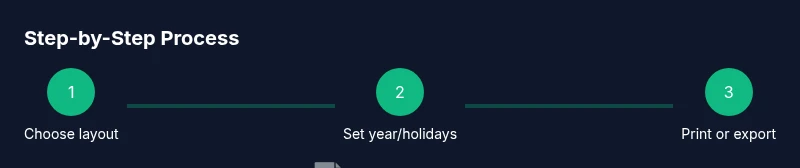
Goal: Create a printable calendar in Google Docs that’s easy to print and share. You’ll use a built-in calendar template or design your own grid, then format dates, add holidays, and print or export as PDF. Essentials: a Google account, a chosen year, and access to Google Docs. This guide covers both quick-start templates and full customization.
Why a Google Docs printable calendar matters
A Google Docs printable calendar helps you stay organized with a simple, shareable format that you can edit on any device. For students balancing class schedules, professionals coordinating meetings, or small teams planning deadlines, a calendar built in Google Docs offers portability and compatibility with widely used word processors. You can print a hard copy for a wall or planner, or export a PDF for distribution via email or LMS. The keyword google docs printable calendar should appear here naturally as you describe the value of using Google Docs to generate a printer-friendly schedule.
By starting with a template or a basic grid, you can tailor the calendar to your exact needs—whether you want a single-page monthly view, a two-page spread, or an annual overview. Because Google Docs stores everything in the cloud, collaborators can propose edits without altering the master file, and you can consolidate holidays, events, and notes in one place. According to How To Sheets, the most efficient calendars start from a clear layout and a reusable template, saving time as you move from year to year.
Templates vs custom layouts in Google Docs
Google Docs offers calendar templates and a flexible blank layout. Templates provide a fast path to a professional look with built-in margins, headers, and grid spacing. Using a template can save you several minutes and reduce formatting errors when you’re in a rush. However, a custom layout gives you full control over column width, font choices, and color coding, which is useful for branding or personal preference. When deciding, consider your printing needs: a single-page monthly calendar benefits from a compact grid, while an academic or fiscal calendar may require a longer layout. You can start by exploring the Google Docs Template Gallery and typing "calendar" to see recent options. If you want multi-month planning, you might duplicate a month and adjust dates accordingly. For more complex calendars, consider creating a master calendar in Google Docs once, then duplicating it for future years to maintain consistency. How To Sheets emphasizes maintaining a clean, readable style and reusing templates to reduce repetitive work.
Layout considerations for print-ready calendars
Printing a calendar from Google Docs becomes predictable when you plan layout ahead of time. Decide between portrait and landscape orientation based on how many months you need on a page. For monthly calendars, landscape often fits better on a standard letter or A4 sheet. Set conservative margins (0.5 to 0.75 inches) to maximize grid space without clipping. Use a grid you can reproduce across pages, and choose a readable font size (typically 10–12 pt for body text and 14–18 pt for month headers). If your calendar includes color coding, test print in color or grayscale to ensure contrast remains legible. Keep accessibility in mind by using high-contrast colors and avoiding decorative fonts that hinder clarity.
Data you may want to include (holidays, events, color coding)
Incorporate essential data that improves planning: month headings, days of the week, and a grid that covers all weeks in the month. Add major holidays or personal events as colored cells or notes in the margins. Color coding (e.g., blue for meetings, green for deadlines, red for holidays) helps quick scanning in a printout. If you’re creating an annual calendar, add a small calendar legend to explain color codes. Consider keeping a separate notes area so you can jot down reminders, exam dates, or project milestones without crowding the grid.
Accessibility and print quality: fonts, margins, colors
To ensure readability, use high-contrast color combinations and sans-serif fonts like Arial or Roboto. Avoid very light colors that won’t print well on standard paper. Maintain consistent spacing, borders, and padding between cells to keep the grid clean. When printing, preview to verify margins and alignment, and choose a paper size that matches your intended use. If your printer supports it, enable borderless printing for edge-to-edge layouts; otherwise, rely on your margins to keep content from clipping.
Beyond monthly: annual calendars and academic calendars
A printable calendar in Google Docs isn’t limited to a single month. You can craft annual calendars by creating a multi-month grid or by using a side-by-side layout that shows all months on one or two pages. For school or business planning, add sections for term dates, exam periods, and important milestones. A consistent master template will simplify updating next year; duplicate the finished calendar and adjust only the dates and holidays. This approach aligns with best practices recommended by How To Sheets for reusable templates.
Final checks before printing
Before you print, verify that the dates align correctly with the year you selected and that holidays or events haven’t shifted. Do a quick print test on plain paper to validate alignment, font sizes, and color contrast. If you plan to distribute digitally, export the document as a PDF to preserve formatting. Saving a copy as a Google Docs template enables you to reuse the same design yearly without rebuilding from scratch.
Tools & Materials
- Computer or tablet with internet access(To access Google Docs and templates, edit remotely or offline if needed)
- Printer and suitable paper(Color printing helps with color-coding; use standard letter or A4 size)
- Google Docs calendar templates or a blank grid(Search Template Gallery for 'calendar'; or create a grid with a table)
- Ruler or grid ruler for alignment(Helpful for drafting a precise grid before typing dates)
- Color markers or highlighters(Optional for planning colors to apply in printing)
Steps
Estimated time: 30-60 minutes
- 1
Decide calendar type and year
Choose whether you want a monthly, weekly, or annual calendar. Select the year you’re planning for, and note any holidays or school terms you want included. This step sets the scope for your layout and ensures all dates will align correctly across the grid.
Tip: Write down the target layout on a sticky note before you start editing in Docs. - 2
Open Google Docs and choose a layout
Open a new document and either select a calendar template from the Template Gallery or prepare a blank layout using a table grid. Ensure the page orientation and margins fit your chosen printing size.
Tip: If you’re using a template, duplicate it to create new months instead of re-editing the original. - 3
Set up the header with month/year
Create a clear header row that includes the month name and year. Apply a bold style and a larger font size so it’s easily legible when printed. This header anchors the calendar visually and guides the reader.
Tip: Consider using a consistent header style across all months for a polished look. - 4
Insert days of the week and date grid
Add a row for days of the week (Sun–Sat) and fill in the dates for the month. Use a 7-column grid for monthly calendars. If you’re new to Docs, insert a table and adjust cell borders for a clean grid.
Tip: For accuracy, double-check the starting day of the month against a trusted calendar source. - 5
Format fonts, borders, and colors
Choose readable fonts and appropriate font sizes. Apply borders to the grid and use color coding for events. Keep color usage consistent across all months to reduce visual clutter.
Tip: Test print in grayscale as well to ensure contrast remains clear without color. - 6
Add holidays and events
Insert holidays, school terms, and major deadlines as labeled entries in the grid or side notes. Use a color code and brief text to keep the calendar legible.
Tip: Use note cells or margins for additional details that don’t fit in the grid. - 7
Preview and export/print
Use Print Preview to confirm alignment and margins. If distributing digitally, export as PDF to preserve formatting. Save a copy as a template for future years.
Tip: Always save a backup copy of your master calendar before making year-specific edits.
FAQ
Can I print directly from Google Docs without exporting?
Yes. You can use File > Print to send the document to your printer or choose File > Download to save as a PDF before printing.
Yes. You can print directly from Google Docs or save as PDF for easy distribution.
Should I always use a template or is a custom layout better?
Templates save time and ensure consistent styling, while a custom layout gives full control over spacing, fonts, and colors. Choose based on your needs and time constraints.
Templates are fast; custom layouts are flexible. Pick the approach that fits your workflow.
How can I add holidays to my calendar in Google Docs?
You can type holidays manually into the date cells or copy a list from another calendar and paste it into your calendar. Use color coding to distinguish holidays.
You can insert holidays manually or paste a list, then color-code for clarity.
Is it possible to reuse the calendar for future years?
Yes. Save the document as a template or copy the master calendar and adjust only the year and dates for the next year.
Save a master calendar as a template to reuse for future years.
What print settings work best for calendars?
Use landscape orientation for most monthly calendars, set margins to narrow, and print at 100% scale to avoid clipping.
Landscape helps fit the grid; print at 100% for accuracy.
Are there accessibility considerations to keep in mind?
Choose high-contrast colors, readable fonts, and provide alt-text for any digital version of the calendar.
Use clear fonts and colors; add alt-text for accessibility.
Watch Video
The Essentials
- Plan your layout before editing
- Use templates for speed and consistency
- Color-code events for quick scanning
- Export as PDF for reliable printing
- Reuse a master calendar template yearly